How Polymer80 Frames Are Manufactured
How Polymer80 Frames Are Manufactured
If you’ve ever held a Polymer80 PF940 frame, you’ve felt the result of a precise manufacturing process. That textured grip and rigid frame rail system didn’t happen by accident. It starts with a high-strength polymer blend and a steel-reinforced mold, where raw material is transformed into the foundation for a custom firearm. Understanding this process explains why these 80% frames are so durable and why the finishing work is in your hands.
The Core Material: More Than Just “Plastic”
The term “polymer” often gets misrepresented as cheap or weak, but that’s not the case here. Polymer80 frames are injection molded using a proprietary, glass-filled nylon polymer. This isn’t the plastic of a toy; it’s an engineering-grade material designed for high tensile strength, impact resistance, and thermal stability. The “glass-filled” component is critical—microscopic glass fibers are embedded within the nylon matrix, drastically increasing stiffness and preventing warping under stress and heat. This specific formulation is what allows the frame to handle the repeated shock and pressure of firing, whether it’s for a compact PF940SC in 9mm or a full-size PF45 frame built for .45 ACP. The material is precisely chosen to balance weight, durability, and the ability to be machined by the end user.
Injection Molding: Creating the Raw Form
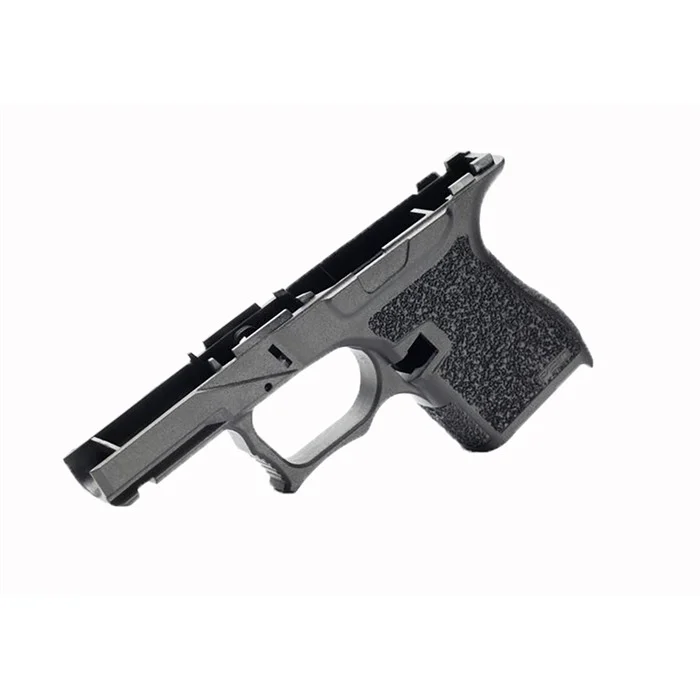
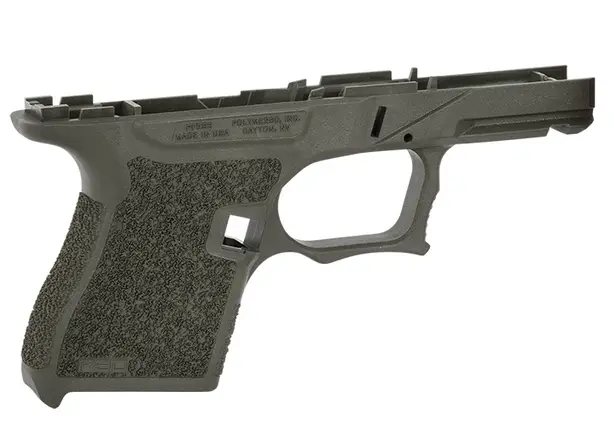
The heart of the manufacturing process is injection molding. Granules of the glass-filled nylon polymer are fed into a heated barrel, melted into a viscous liquid, and then injected under extreme pressure into a hardened steel mold. This mold is the negative image of the final frame, including every detail: the grip texture, serial number pad, trigger guard undercut, and most importantly, the cavities for the front and rear frame rails. The polymer is forced into every crevice of the mold, then rapidly cooled to solidify. Once ejected, you have what’s known as a “raw” or “unfinished” frame—a single, solid piece of polymer with critical areas like the fire control group pocket and rear rail cavity still filled with polymer. This is the state in which you receive it from P80Complete.
Critical Reinforcements: The Frame Rail System
While the polymer body provides the structure, the locking and sliding interfaces of a pistol require metal. This is where Polymer80’s design diverges from traditional frames. Instead of molding metal inserts into the polymer (a process called insert molding), the frames are designed to accept separate, precision-machined steel rails. The front rail module and rear rail module are supplied as separate components in a kit. During the finishing process, you’ll mill precise holes in the polymer frame to install these rails. This system places hardened steel exactly where the slide reciprocates and where the barrel locks up, ensuring longevity and reliable alignment. The rails are the heart of the build’s reliability, which is why genuine Polymer80 parts from a trusted source like P80Complete are non-negotiable.
The “80%” State: Intentional Design for User Completion
The term “80% frame” is a legal designation, but in manufacturing terms, it’s a deliberate stopping point. The injection-molded frame is intentionally produced with polymer blocking the fire control group cavity and the pin holes for the rear rail. This isn’t an incomplete product; it’s a specifically engineered starting point. The design ensures that the frame cannot accept a slide and fire a round until the end user performs the final machining operations. This involves using a jig and a drill press or hand tools to create the three critical pin holes (trigger, locking block, and rear rail) and using an end mill or hand router to clear the fire control group pocket. This last 20% of work is what transforms the molded polymer blank into a functional firearm receiver, as defined by federal law.
From Mold to Market: Finishing & Packaging
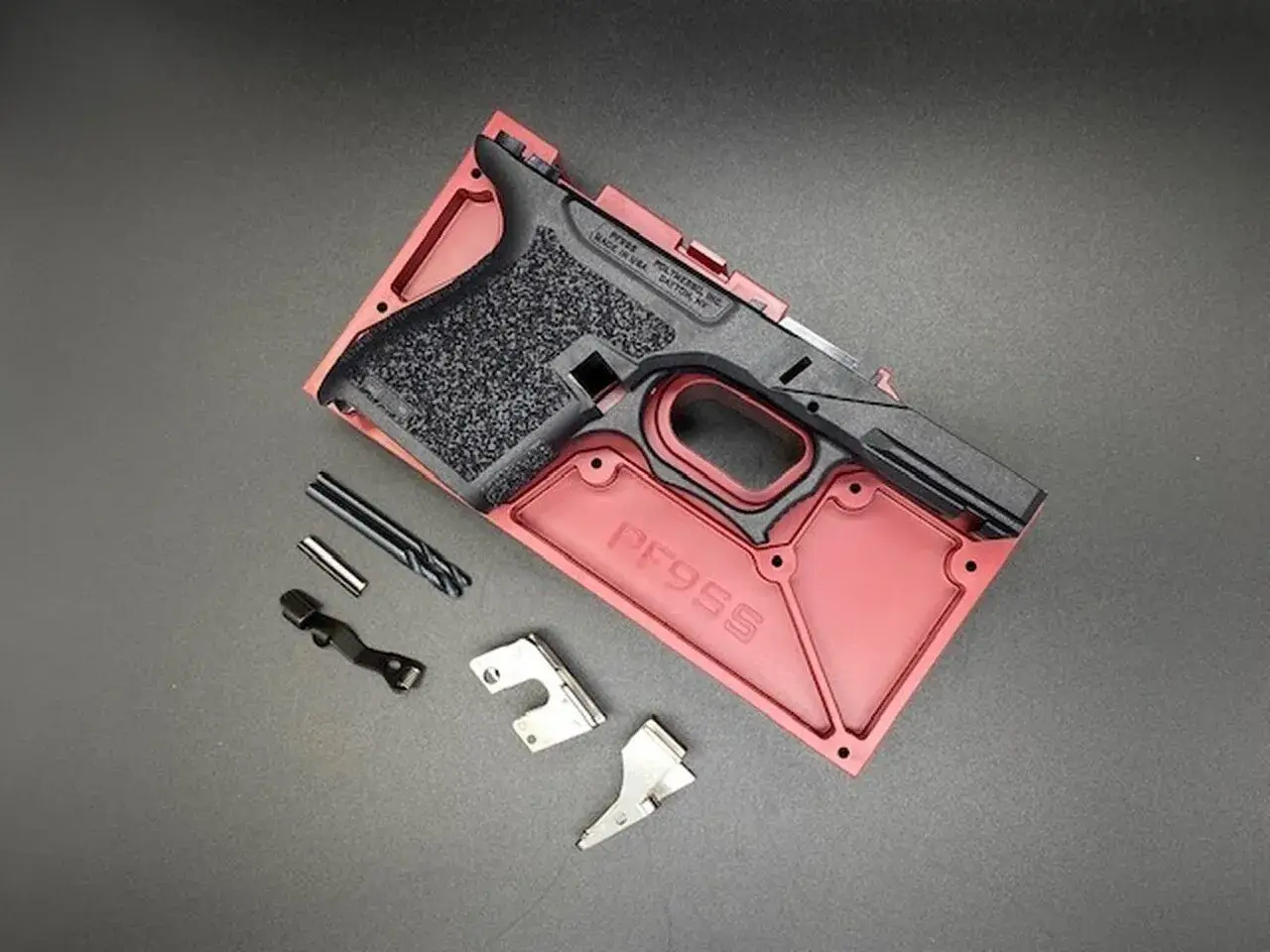
After molding and cooling, the raw frames are inspected for flaws like short shots (incomplete fills) or surface imperfections. They are then paired with their corresponding model-specific jig—a crucial tool made from high-density plastic that guides your drill and router. This jig, along with the correct steel rail set, trigger parts, and pins, is assembled into a complete frame kit. For a builder, sourcing a complete kit from P80Complete ensures all components are OEM-spec and designed to work together seamlessly, whether you’re building a PF940V2 for a Glock 17 slide or a PF9SS for a single-stack 43X. The kit is the direct link between the injection molding process and your workbench.
How are polymer 80 frames made?
Polymer80 frames are made via injection molding. A proprietary, glass-filled nylon polymer is heated and injected under high pressure into a precision steel mold. This creates a solid, one-piece polymer blank with critical areas like the fire control pocket intentionally filled in, putting it in the legal “80% receiver” state. The process includes molding in the grip texture and cavities for the separate, hardened steel frame rails.
What is a polymer 80 frame?
A Polymer80 frame is an unfinished firearm receiver, typically for a striker-fired pistol platform. It is made from a durable, glass-filled polymer and is sold at 80% completion, meaning it requires machining (drilling and milling) by the end user to become a functional frame. It is the foundational component for building a custom pistol, designed to be completed with a parts kit, slide, and barrel.
How to finish a polymer 80 frame?
You finish a Polymer80 frame using the provided jig, a drill press or hand drill, and a router or end mill. The jig clamps the frame and guides you to drill the three critical pin holes. You then use the milling tool to clear the polymer from the fire control group pocket. Finally, you install the front and rear steel rail modules, along with your lower parts kit. Detailed instructions are included with every kit from P80Complete.
Browse our polymer80 frames collection
Last updated: April 05, 2026