What Polymer80 Frames Are Made Of
What Polymer80 Frames Are Made Of
Open the box of a Polymer80 frame and you’ll find a block of material that feels dense and rigid, not like the cheap plastic of a toy. That’s because it’s made from a proprietary, glass-filled nylon polymer, a material engineered specifically to handle the stresses of a firearm’s slide cycling and recoil forces. The exact formulation is a trade secret, but understanding its composition explains why these frames have become a standard for builders.
The Core Material: Glass-Filled Nylon
Polymer80 frames are injection molded from a specific type of nylon polymer, typically Nylon 6 or Nylon 6/6, that’s reinforced with fine strands of glass fiber. This isn’t your average plastic. The glass fiber content, usually between 10% and 30% by weight, is the critical upgrade. It dramatically increases the frame’s tensile strength, stiffness, and heat resistance compared to unfilled nylon. This reinforcement prevents the frame from flexing excessively under load and helps it maintain dimensional stability across a wide temperature range. When you handle a completed P80, the solid, non-flexing feel in the fire control area is a direct result of this glass-filled composite.
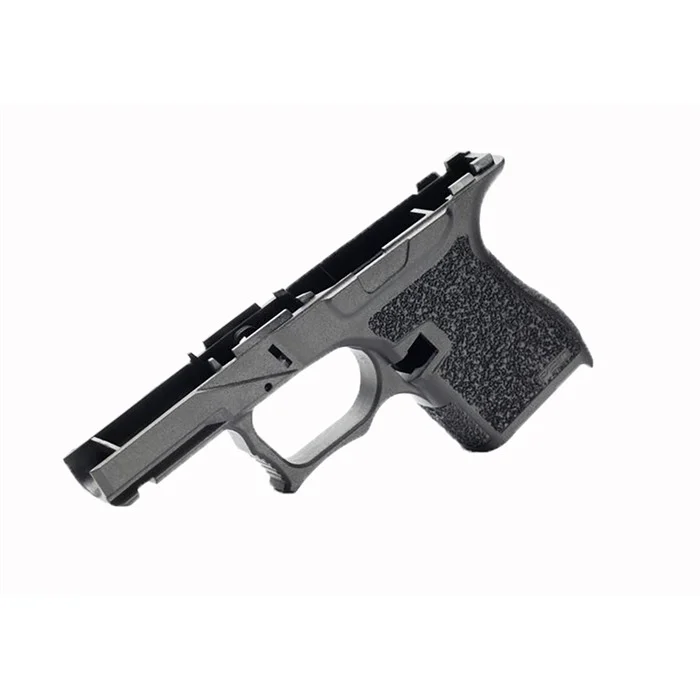
The PF940C compact frame showcases the finished product of the glass-filled nylon molding process. Browse frames like this at P80Complete.
Why Polymer? Durability & Design Advantages
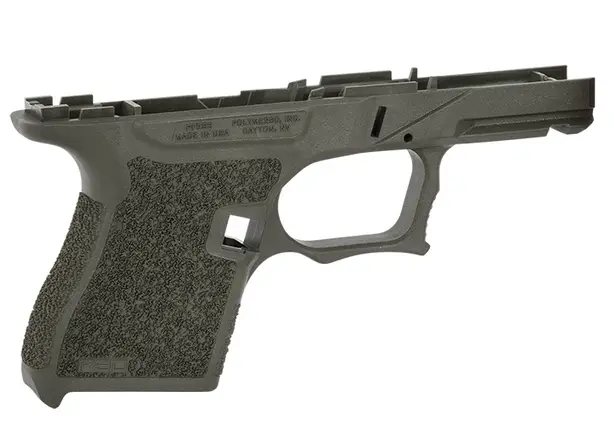
The choice of advanced polymer over traditional steel or aluminum isn’t a compromise; it’s a calculated design decision with proven benefits. Polymer frames are significantly lighter, reducing overall carry weight. More importantly, polymer has inherent shock-absorbing qualities that can dampen perceived recoil. The material is also highly corrosion-resistant, requiring minimal maintenance compared to metal frames. From a manufacturing perspective, injection molding allows for complex, ergonomic shapes that would be prohibitively expensive to machine from metal. The iconic textured grip and undercut trigger guard on a PF940V2 are perfect examples of ergonomics enabled by this molding process.
The Molding Process: From Pellets to Frame
The manufacturing starts with raw pellets of the glass-filled nylon compound. These are fed into a high-temperature injection molding machine, where they are melted and injected under extreme pressure into a precision steel mold. The mold itself is a masterpiece of engineering, creating the frame’s exact geometry, including the integral Picatinny rail sections, locking block pocket, and pin holes. After a rapid cooling cycle, the “frame blank” is ejected. This blank includes the iconic, brightly-colored polymer tabs that must be removed during the build process—a deliberate design that classifies the item as an unfinished receiver, not a firearm.
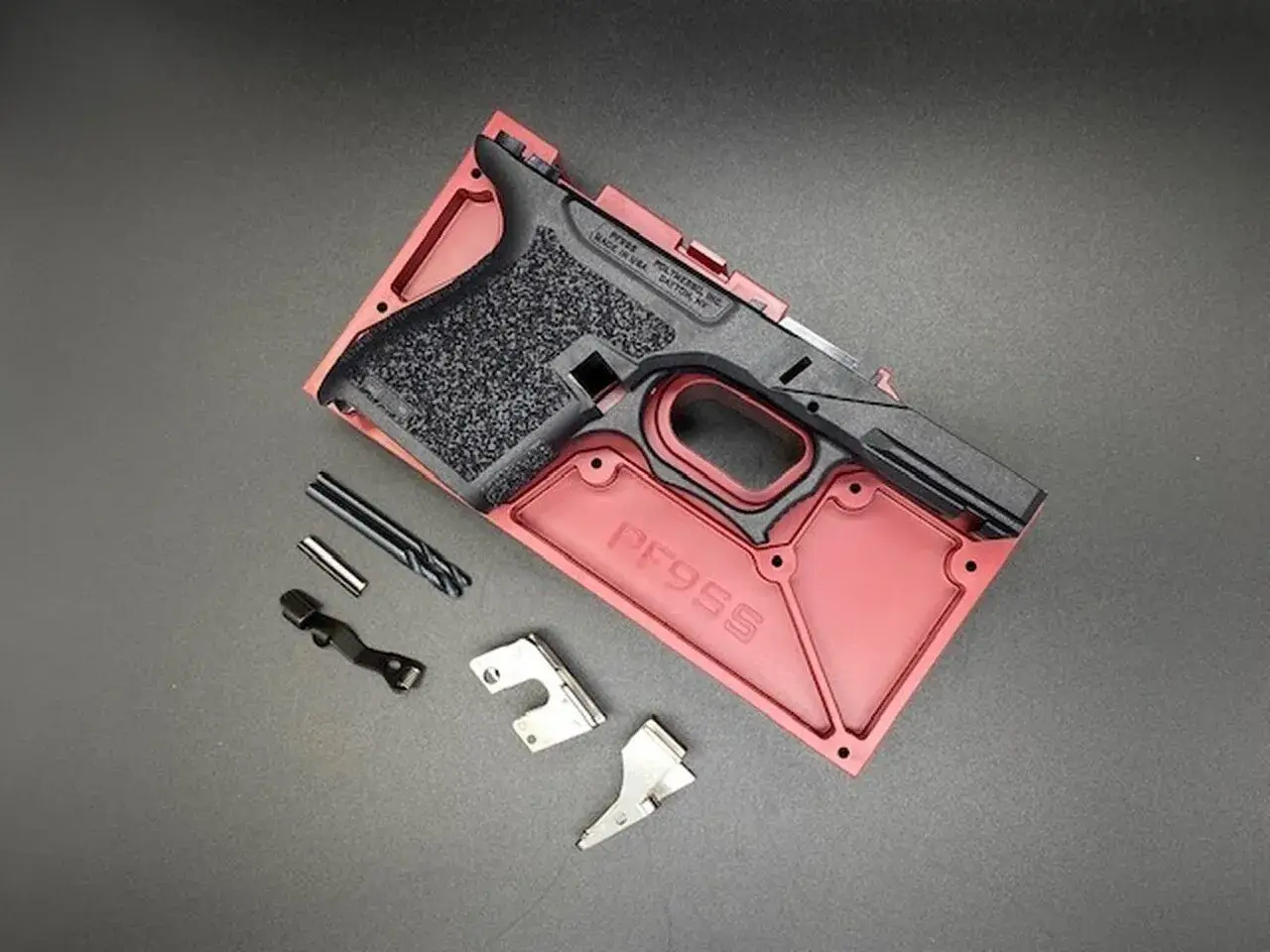
A PF45 large frame blank fresh from the mold, showing the polymer tabs that define its legal status. Find frames for various calibers at P80Complete.
How It Compares to Other Polymer Frames
Not all polymer frames are equal. While major OEMs like Glock use a similar nylon-based compound, Polymer80’s specific formulation and mold design result in distinct differences. The most notable is the grip angle. P80 frames, like the PF940V2, feature a 1911-inspired grip angle that many shooters find points more naturally than the standard Glock profile. The texture is also more aggressive out of the box, providing a secure grip. Furthermore, the internal jig system and the requirement for finishing work mean the builder is creating a truly custom fit between the frame and all other components, which can enhance the final build’s lockup and feel.
Long-Term Performance and Care
A properly assembled Polymer80 frame built from this glass-filled nylon is exceptionally durable. The material is resistant to oils, solvents, and common cleaning chemicals used in firearm maintenance. You won’t see cracks or stress fractures from normal use; these frames are designed to last tens of thousands of rounds. The key to longevity is a correct build. Ensuring the locking block and rear rail module are properly installed and that all pin holes are cleanly finished prevents undue stress concentrations. With basic care, the frame itself will outlast most other components of the firearm.
Frequently Asked Questions
What are polymer 80 frames made of?
Polymer80 frames are made from a proprietary, glass-filled nylon polymer. This is a high-strength composite material where fine glass fibers are embedded within a nylon base, significantly increasing its stiffness, strength, and heat resistance compared to standard plastics, making it suitable for firearm use.
What is a polymer 80 frame?
A Polymer80 frame is an unfinished firearm receiver, often called a “frame blank,” that requires machining (drilling and milling) to become a functional part. It is the core component for building a pistol, designed to accept a slide, barrel, and fire control parts. You can find the jigs and parts to complete them at retailers like P80Complete.
What is polymer 80 made of?
“Polymer80” the brand name refers to the company and its products. The material their frames are made from is a specific formulation of glass-reinforced nylon polymer. This engineered thermoplastic is chosen for its optimal balance of durability, weight, and manufacturability for firearm frames.
Browse our polymer80 frames collection
Last updated: March 27, 2026